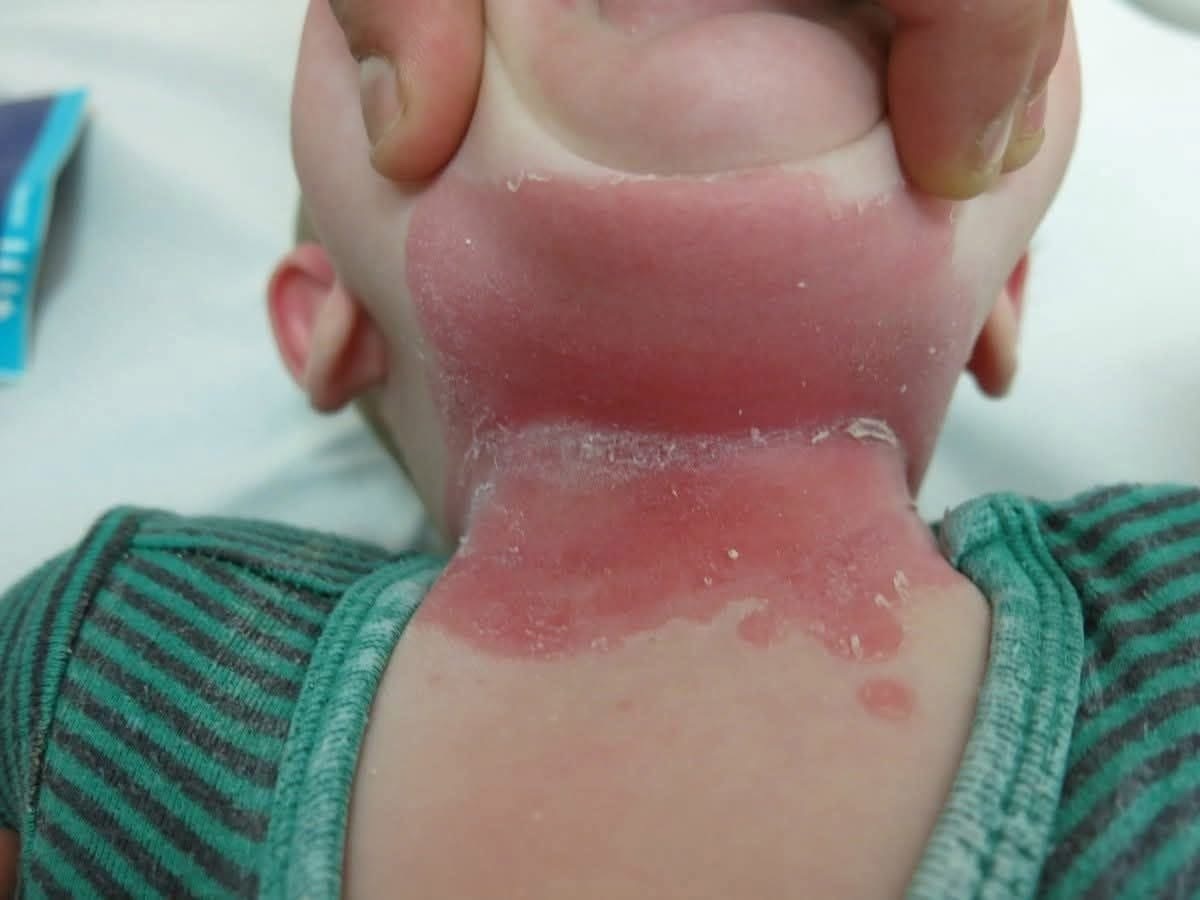
It began with something so small his parents barely noticed it — a faint red line under their baby’s chin. It looked harmless, maybe irritation from drool or the collar of his shirt. But by the afternoon, everything had changed.
The redness spread faster than they could process. What started as one patch turned into a bright, burning ring wrapping around his neck. The skin was hot to the touch, peeling in places, and the baby cried in a way his mother had never heard before — panicked, painful, desperate.
Frightened, they rushed him to the hospital. Nurses took one look and immediately moved them to an exam room. The doctor arrived within minutes, studying the inflamed skin with a seriousness that made the parents’ stomachs drop.
“This didn’t happen overnight,” he said quietly. “His body has been reacting for days. You just didn’t see the signs.”
He explained that babies sometimes develop deep skin reactions that look small at first — just a bit of redness or dryness — but beneath the surface, the inflammation spreads rapidly. Heat, sweat, infection, or even an allergic reaction can trigger a burning reaction that becomes dangerous if ignored.
By the time they arrived at the hospital, the skin around his neck was so irritated that tiny blisters had started forming. The doctor called it one of the worst cases he’d seen in years.
His mother broke down. “How did we miss this?” she whispered.
The doctor placed a hand on her shoulder. “It happens more than you think. Babies can’t tell you when something burns, stings, or hurts. This was his way of crying for help.”
The treatment began immediately — cool compresses, medication to calm the reaction, and careful cleaning to prevent infection. Slowly, the redness began to fade, and the baby’s breathing eased. By nightfall, he was resting peacefully, finally out of pain.
But the doctor gave the family a warning they’ll never forget:
“Any sudden redness like this — spreading fast, looking raw, or causing tears — is never just irritation. It’s a sign you need to act NOW. Minutes matter.”
The parents left the hospital exhausted but grateful, holding their little boy tightly, knowing how close they were to something far worse.
They shared their story so other families wouldn’t ignore the early signs — because what looks harmless can become serious in a matter of hours.
A red patch can be the first whisper of something no parent ever wants to face.
Leave a Reply