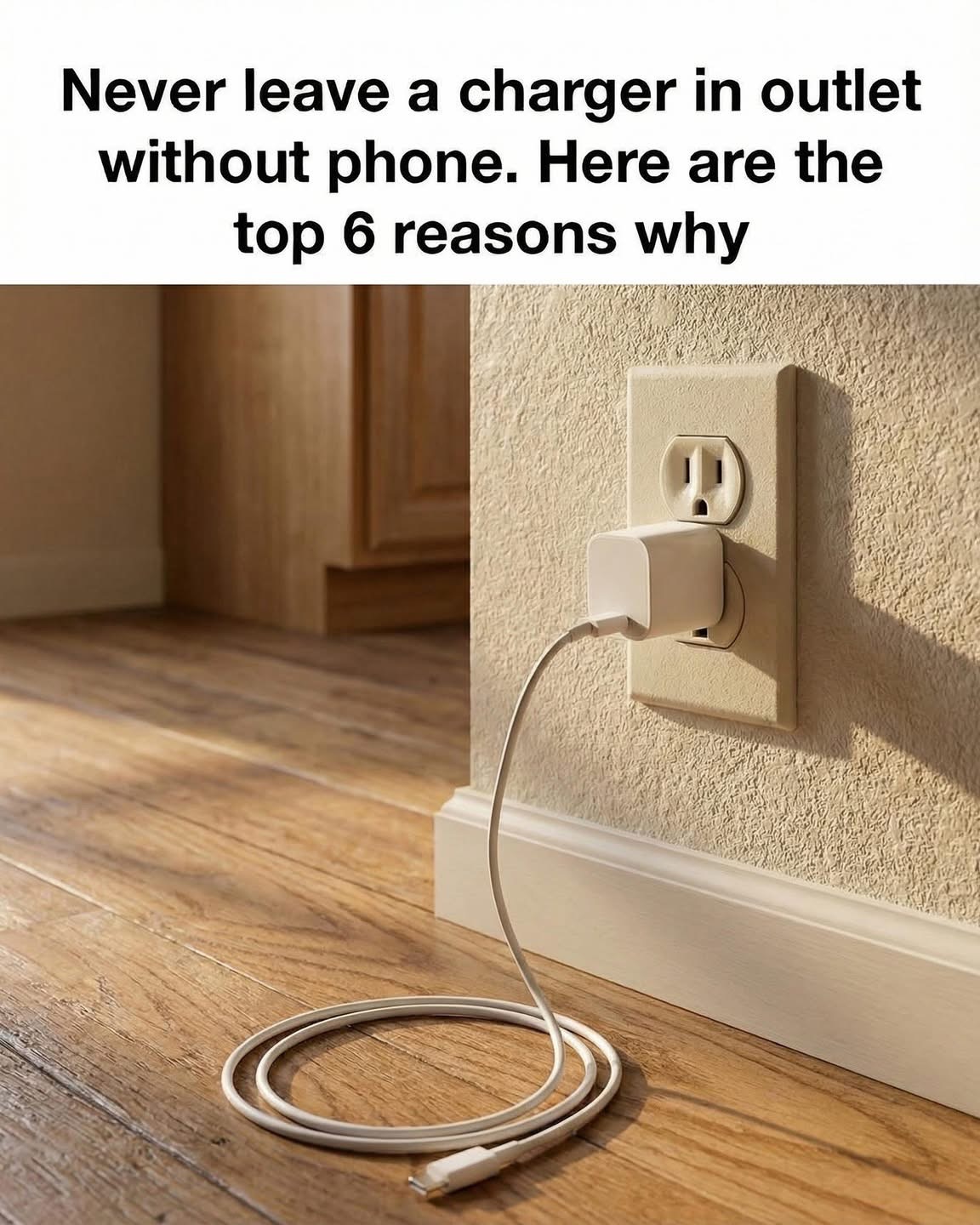
Leaving a phone charger plugged into the wall when it’s not charging a device may seem harmless, but experts say it’s a habit that can quietly create risks over time. Many people do it out of convenience, assuming a charger only draws power when a phone is connected. In reality, most chargers continue to draw electricity as long as they’re plugged in, even if nothing is attached to the cable.
One major concern is fire risk. Cheap or damaged chargers can overheat while idle, especially if they’re left plugged in for long periods or near flammable materials like curtains, bedding, or wooden floors. Electrical surges, faulty wiring, or worn-out adapters can turn a forgotten charger into a potential hazard, particularly overnight when no one is watching.
Another issue is energy waste. While a single charger may use only a small amount of power, millions of unused chargers plugged in worldwide contribute to unnecessary electricity consumption. Over time, this “vampire power” adds up, increasing energy bills and placing extra strain on power grids without providing any real benefit.
Leaving chargers plugged in can also shorten their lifespan. Constant exposure to heat and power fluctuations can degrade internal components faster, making the charger more likely to fail when you actually need it. This can lead to frayed cables, loose connectors, or internal damage that increases safety risks even further.
There’s also the issue of electrical damage during storms or power surges. A plugged-in charger can be damaged instantly by a surge, potentially ruining connected outlets or causing sparks. Unplugging chargers when not in use is a simple way to protect both the charger and your home’s electrical system.
Finally, chargers left plugged in are more likely to be chewed by pets, stepped on, or accidentally damaged, especially when cables are left trailing across floors. This kind of wear can expose wiring and increase the chance of shocks or overheating later.
Unplugging a charger when it’s not in use takes only a second, but it can reduce fire risks, save energy, extend the life of your devices, and improve overall home safety. It’s a small habit that makes a surprisingly big difference.
Leave a Reply