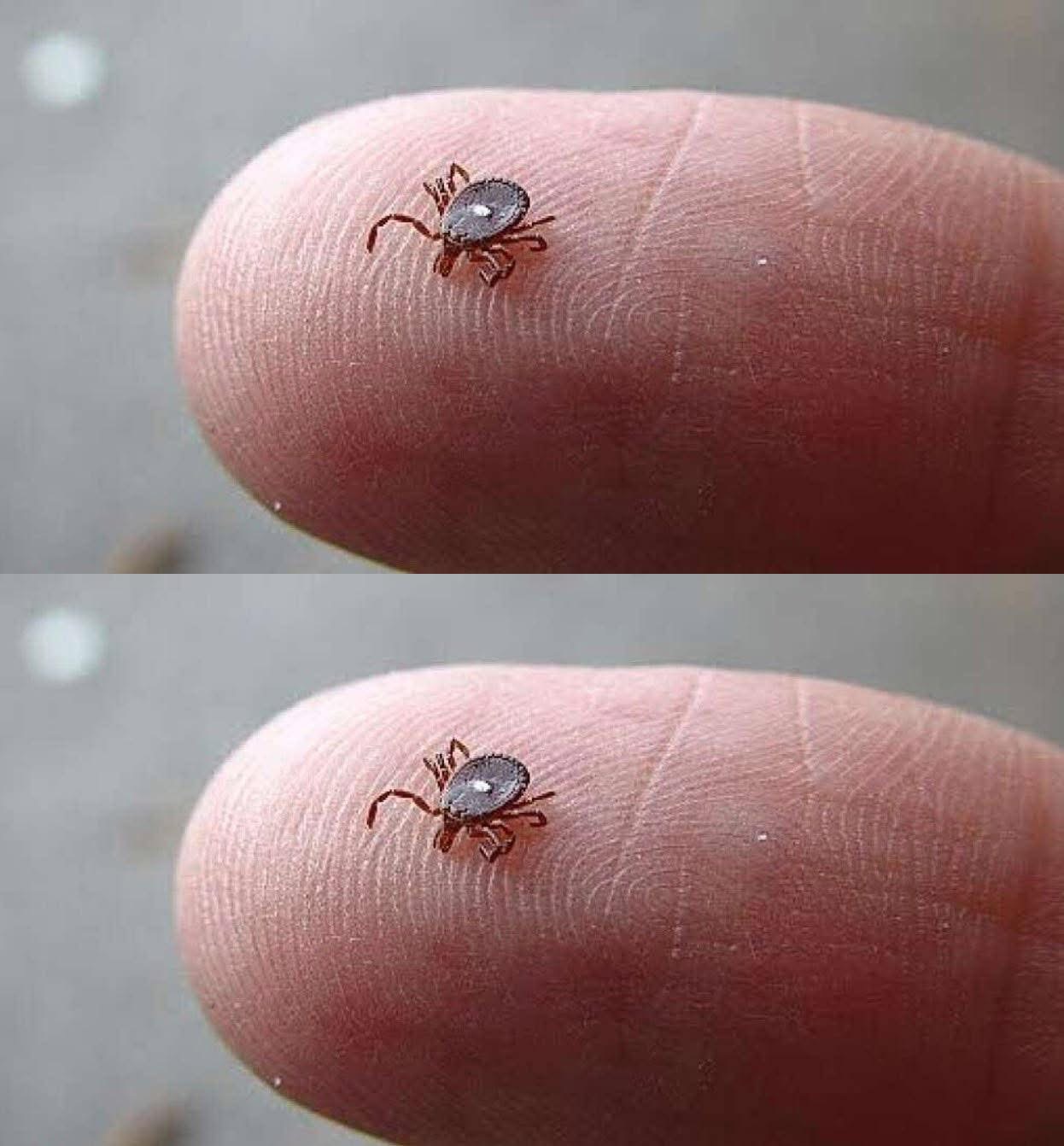
When I brushed it off my son’s leg, my stomach dropped. At first glance it looked like an ordinary tick, but then I saw the single bright white spot on its back. It wasn’t something I’d seen before, and the more I stared at it, the more uneasy I felt. We had just come back from a peaceful walk in the woods, the kind of afternoon you never expect to turn into a warning story. Yet in that moment, I knew this tiny creature wasn’t just “another tick.”
What you’re looking at is a Lone Star tick. The white dot is the giveaway. Female Lone Star ticks have a distinct silvery-white spot on their backs, which is exactly what makes them stand out and scare people who notice it. They are most commonly found in wooded areas, tall grass, and leaf litter, especially in warm months. They’re aggressive compared to other ticks and are known to actively crawl toward humans rather than just waiting passively.
Yes, you should take it seriously. Lone Star ticks are known carriers of several illnesses, including ehrlichiosis and tularemia. But what really alarms many parents is their link to Alpha-gal syndrome, a condition that can cause a sudden allergy to red meat. Some people develop severe reactions hours after eating beef, pork, or lamb following a Lone Star tick bite. This isn’t a myth — it has changed lives.
If you find one on your child, remove it immediately using fine-tipped tweezers. Grab it as close to the skin as possible and pull straight out without twisting. Clean the area thoroughly and wash your hands. Save the tick in a sealed container or bag in case symptoms appear later and a doctor needs identification. Do not crush it with your fingers, and don’t use heat, petroleum jelly, or folk remedies.
After removal, monitor closely. Watch for fever, fatigue, rash, headaches, muscle aches, or unusual allergic reactions in the days or weeks that follow. If anything feels off, contact a healthcare provider and mention the tick specifically. Early treatment makes a huge difference. Many tick-related illnesses respond well to antibiotics if caught early, but delays can complicate recovery.
The scariest part isn’t the tick itself — it’s how easily it goes unnoticed. A tiny white dot on a moving speck can be the difference between brushing it off and catching a serious health risk early. If you walk in wooded areas, always do tick checks, especially on children. This one isn’t just creepy. It’s a warning worth remembering.
Leave a Reply