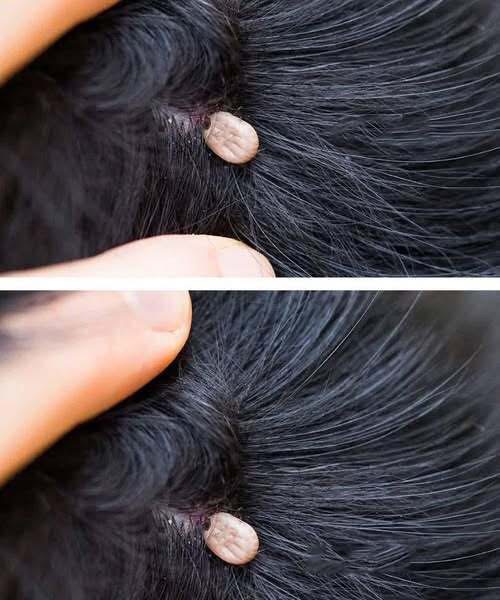
When a parent casually runs their fingers through a child’s hair, they expect familiar surprises—knots, crumbs, or perhaps a forgotten toy fragment. Discovering a strange, unmoving lump instead can be deeply unsettling. The sudden realization that something foreign is attached to a child’s scalp triggers fear, confusion, and an urgent need for answers. The moment feels intrusive and emotionally jarring, turning an ordinary gesture into a shock that demands attention.
The small, pale-gray shape immediately stands out because it doesn’t resemble skin or anything naturally belonging there. Its firm attachment raises alarm, and closer inspection often leads to a troubling conclusion: it is likely a tick. For many parents, ticks are abstract concerns rather than everyday realities, making their sudden appearance especially disturbing. Their ability to cling unnoticed challenges assumptions about safety and awareness.
Ticks change dramatically as they feed. Once engorged, they swell into rounded, pebble-like forms that no longer resemble the tiny insects people imagine. This transformation adds to the confusion, as the tick appears unnatural and inert. Its stillness and size make identification difficult for those unfamiliar with its feeding stage.
Leave a Reply