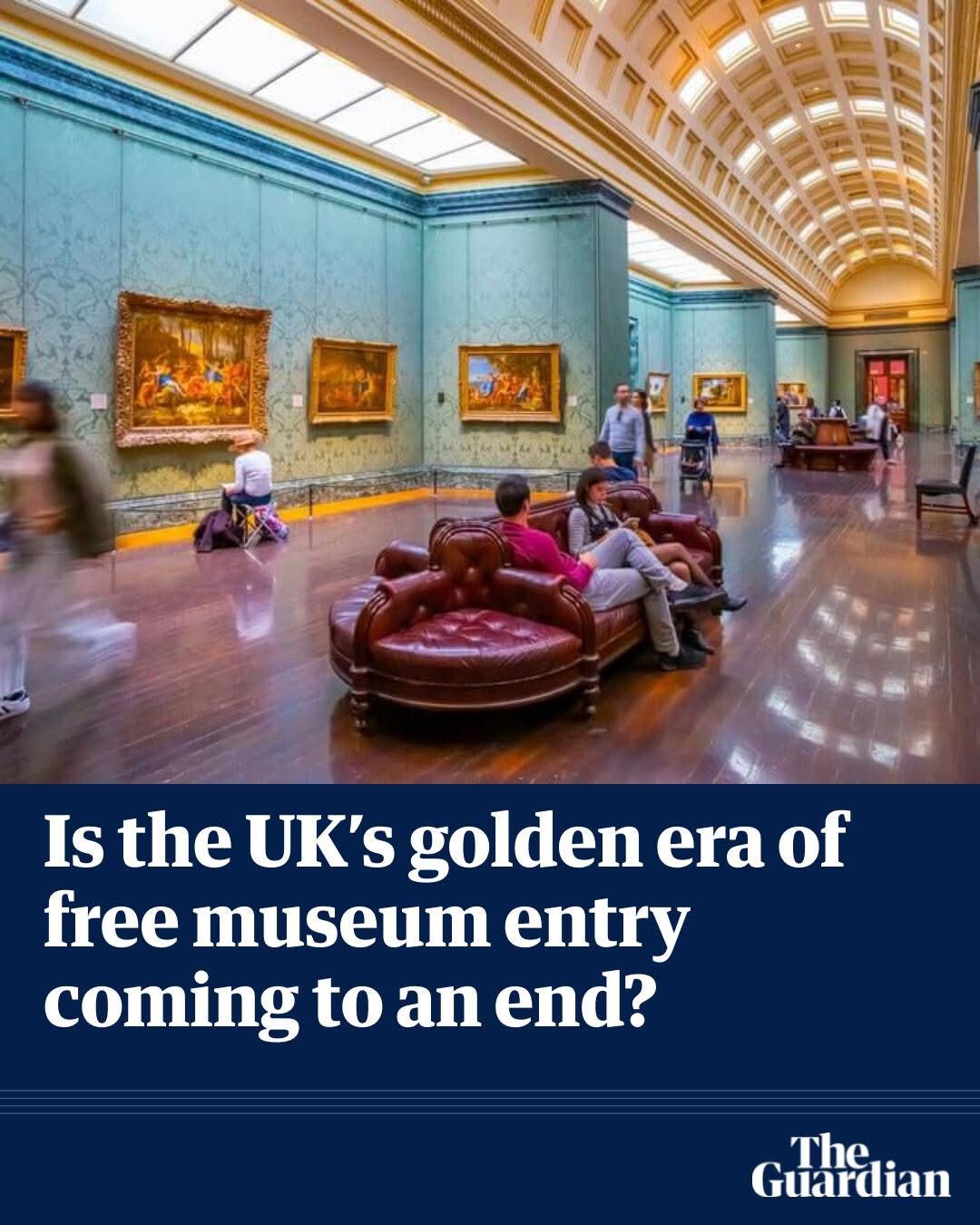
For a quarter of a century, visitors to the UK’s national museums and galleries have enjoyed universal free entry to see permanent collections.
The policy, introduced by the New Labour government in 2001, has been widely credited with improving access to culture and significantly increasing footfall to some of the country’s best-known attractions.
But as funding pressures deepen across the sector, and running costs increase, a policy once treated as untouchable is now under renewed scrutiny.
The tension was brought into focus this week, when the National Gallery announced it was to make significant cuts in the face of an £8.2m deficit in the coming year, which could mean fewer free exhibitions, reduced international borrowing of artworks and higher ticket prices.
The gallery said it would cut spending on “public programmes, and activities where, for a number of reasons beyond our control, we can no longer justify their costs”.
The announcement fuelled fears that free access may become harder to sustain – concerns heightened by the recent Hodge review of Arts Council England, which recommended charging international touriststo access permanent collections at national institutions.
“It’s shocking to learn that the National Gallery is in such financial difficulties – but the answer should not be to make visiting museums and galleries more prohibitive,” said Alison Cole, the director of the Cultural Policy Unit thinktank.
Leave a Reply