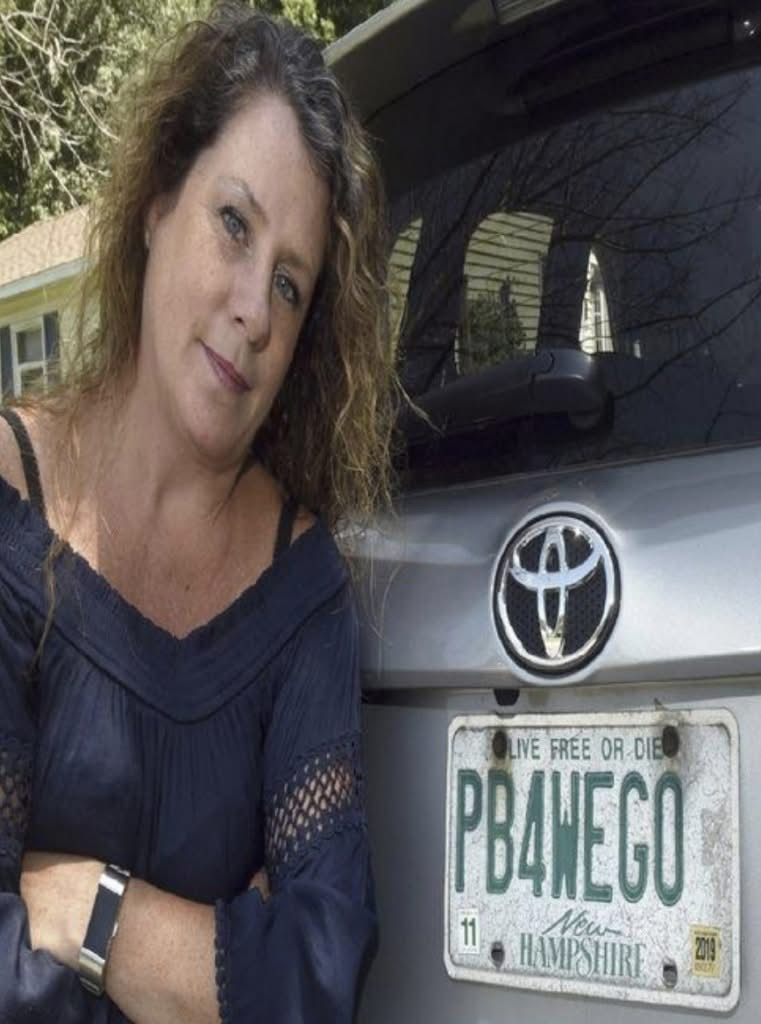
For over a decade, her license plate was part of her identity — a lighthearted, harmless message that made people smile at stoplights and sparked conversations in parking lots. Personalized plates are a staple of New Hampshire’s “Live Free or Die” spirit, and hers was no exception. For fifteen years, she renewed it without a single complaint from officials. But one morning, a letter arrived from the state demanding she turn it in immediately. The reason? According to authorities, her plate was now considered “offensive.”
The license plate read PB4WEGO — a playful abbreviation of the classic parental reminder: “Pee before we go.” Parents, teachers, nurses, and even strangers had laughed about it for years. Children pointed at it. Adults joked that it was the most relatable thing on the road. To her, it wasn’t crude or inappropriate — it was simply a funny acknowledgment of everyday life. But without warning, the same state that approved her plate fifteen years earlier decided it violated new guidelines meant to ban vulgar or suggestive messages.
The confusion quickly turned into frustration. How could a plate deemed acceptable for over a decade suddenly become unacceptable? She had never received a complaint, never been questioned by an officer, and never expected a harmless phrase to trigger government censorship. The reaction online was immediate and explosive. Thousands of residents accused the state of overreaching, policing humor, and inconsistently enforcing rules that had never been clearly defined. Many drivers even posted their own plates saying far more explicit things — plates that had never been questioned.
As the controversy grew, the debate turned into something bigger than a single license plate. It became a conversation about freedom of expression and the boundary between public decency and excessive control. Supporters rallied behind her, arguing that if a plate as innocent as “PB4WEGO” could be banned, no personalized plate was safe. Others felt the state had embarrassed itself by targeting the wrong message entirely. Even lawmakers chimed in, questioning whether the DMV had gone too far.
She decided she wouldn’t give in quietly. She filed an appeal, standing firm in her belief that humor isn’t a crime and that everyday phrases shouldn’t be treated as indecent. What began as a simple license plate dispute turned into a statewide fight for common sense — a reminder that sometimes bureaucracy forgets the human story behind the rules.
Today, her case remains a symbol of something much larger: how quickly harmless fun can come under fire, and how important it is for ordinary people to push back when the system oversteps. Because in the end, it wasn’t just a plate — it was her voice.
Leave a Reply