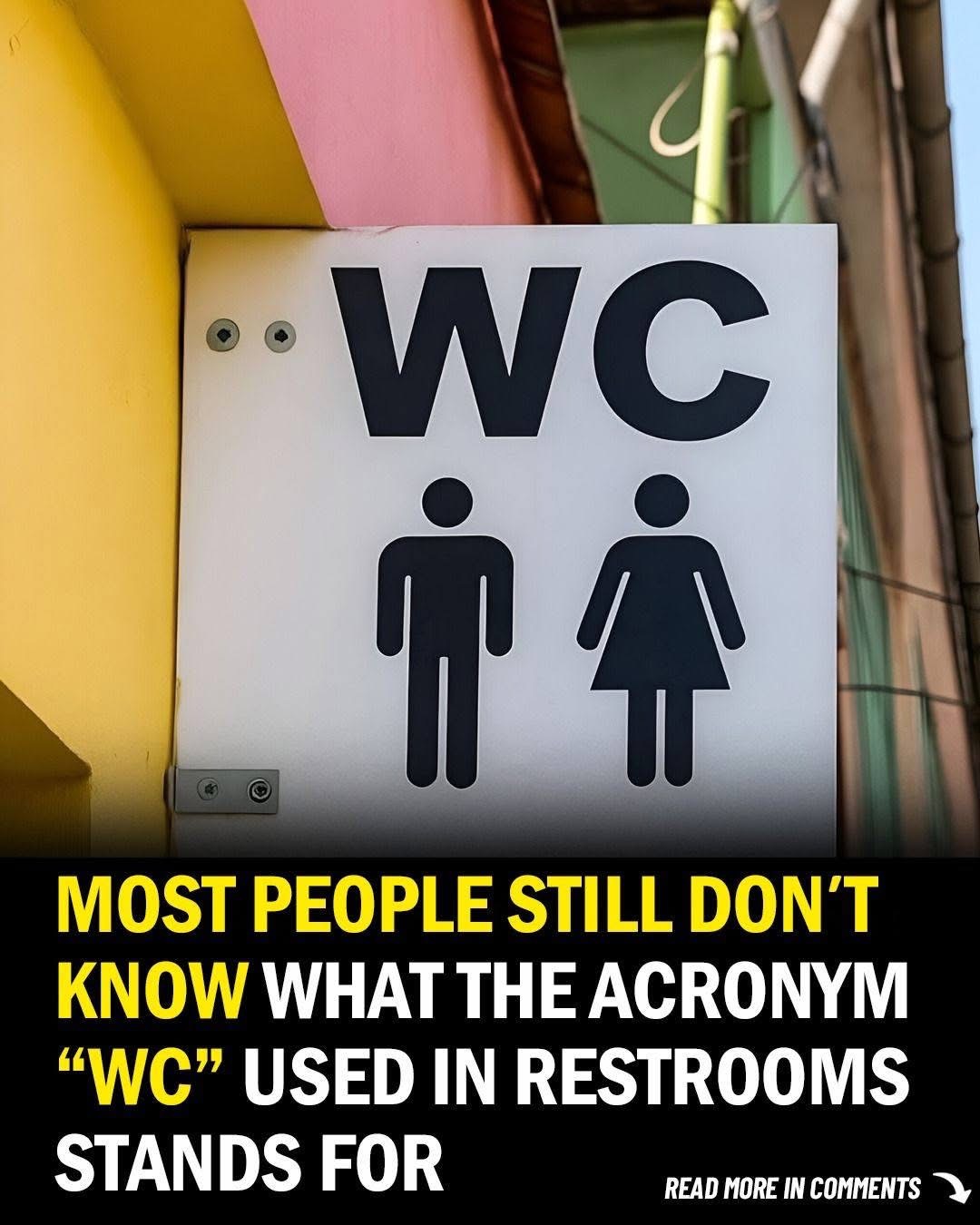
If you’ve ever traveled through airports, train stations, or old European cities, chances are you’ve come across a sign marked “WC.” It’s one of the most common symbols in the world — but few people actually know what it stands for.
The abbreviation “WC” means Water Closet, a term that first appeared in the 19th century, during the early days of indoor plumbing. Before modern bathrooms existed, most people relied on outdoor latrines or chamber pots. When flushing toilets were invented and brought inside, they were placed in small private rooms — known back then as “closets.” Since these new rooms used running water, they became known as Water Closets.
At the time, having a Water Closet inside your home was a luxury, something only the wealthy could afford. The term spread quickly through England and Europe, and soon the abbreviation “WC” began appearing on doors, trains, and hotels. It became the polite way to refer to a toilet without saying the word directly — which was considered improper in polite society.
Although the full phrase has mostly disappeared from everyday speech, “WC” remains an international symbol that everyone understands. Whether you’re in Germany, France, Italy, or Japan, the letters “WC” still point to one thing: the restroom.
So the next time you see those two little letters, remember — you’re looking at a piece of history. A reminder of how something as simple as plumbing transformed daily life, and how two letters from the 1800s became one of the most universally recognized signs on Earth.
Leave a Reply