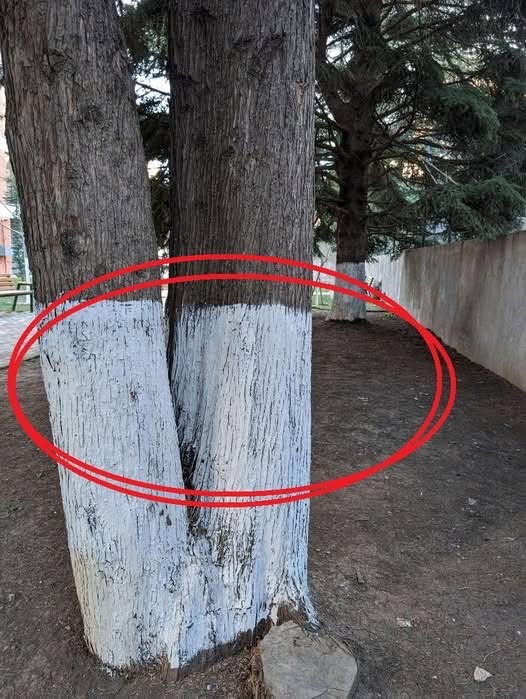
It looked strange at first. Early in the morning, uniformed workers moved through the neighborhood, stopping at every tree and carefully painting the lower part of each trunk white. By the end of the day, the entire street looked different, and naturally, people started asking questions. Was it cosmetic? A warning? A sign something was wrong?
The truth is far more practical than alarming. Painting tree trunks white is a long-standing protective practice used in many cities and rural areas. One of the main reasons is sun protection. During colder months and early spring, tree bark can crack due to rapid temperature changes between day and night. The white paint reflects sunlight, helping prevent a condition known as sunscald, which can seriously damage or even kill a tree over time.
Another key reason is pest control. The painted section acts as a barrier that discourages insects from climbing the trunk to lay eggs in the canopy. Certain pests are especially active near the ground, and the coating makes the tree far less inviting to them. In some areas, the paint also contains non-toxic additives designed specifically to repel harmful insects.
There’s also a safety and visibility factor. Trees painted white are easier to see at night, especially near roads, sidewalks, or public paths. This helps prevent accidents involving vehicles, cyclists, or pedestrians, particularly in low-light conditions. In urban planning, it’s a simple but effective visibility measure.
In some cases, the white paint is also used as a maintenance marker, letting city crews know which trees have been inspected, treated, or are part of a specific care program. It’s a quick visual system that helps manage large numbers of trees efficiently.
So while it may have looked unusual or even concerning at first, the white paint is actually a sign of care, not danger. It protects the trees, extends their lifespan, and helps keep the neighborhood safer. Sometimes the most surprising changes are simply quiet acts of maintenance working behind the scenes.
Leave a Reply